SHOWING MY TEETH
SHOWING MY TEETH
[AUTHOR]
Andrew Zellinger
[DATE]
MAR 28th 2026
MAR 28TH 2026
[I got fired on the day I left Denver]
Two years after COVID hit New York, I packed everything and moved to Colorado — out of the cityscape, closer to the mountains. For two years I backcountry skied with my mountaineer cousin and worked the contracts I'd carried with me from New York. For a while I could breathe. Then the contracts thinned, one by one, as clients pulled back from an economy that hadn't stopped 'contracting' or whatever we call this, since the pandemic. Before I'd fully registered it, I was in survival mode.
[Around then, I learned my father was sick]
So, I took a lead design role at a smart dog collar startup — mostly because the founder fast-tracked my application and promised me the world. What I pieced together shortly after was that he'd landed in hot water when SoftBank pulled back; he'd panicked and quietly let go of his entire design team. I arrived as the sole designer, expected to carry the work of a whole design department alone.
The app had a feature for recovering a pet that had gone missing. The founder asked me to build a flow that solicited video testimonials from users the moment they exited that recovery flow — not to improve the product, but to generate marketing content. He wanted panicked pet owners to record video right after losing an animal. Maybe they'd gotten it back. Maybe they hadn't. Maybe they'd found it on the side of the road. I build for the person on the other side of the screen; the mandate ran against everything I practice. I came back with a range of softer, more humane alternatives. He refused, and reprimanded me for working proactively.
After that, I was pushed out over the course of my last summer in the mountains — taken off product, handed busywork. I had told leadership, plainly, that I was moving to Florida because my father was gravely sick. In my final weeks they flooded me with work anyway. On my last day, with the movers scheduled for the afternoon, they pressed me to hit a marketing deadline that morning. The moment I handed off the work, my accounts froze. Everything went dark except one Slack message from the founder: "Can I connect?" He fired me from a balcony, on the back end of his end-of-summer vacation in Spain. I genuinely believe he angled the camera to show me his view of Barcelona. Then he blocked me — from Slack, and from the work I'd made. On moving day. My father had cancer.
[I put on a blank face and drove twelve hours through the night]
Twelve hours is a long time to think.
I thought about the recruiter who'd reached out two weeks before I was fired.
No prior relationship with her, no warm intro, in the worst job market I'd seen.
I thought about twenty years of doubting myself while watching less capable people steer the ship.
I thought about how imposter syndrome and sharp self-awareness can live in the same body.
I thought about how this industry often hires on perception — more than on the actual work.
I thought about the bootcamps that flooded the field right at my mid-career mark.
How quickly hard-won experience got repriced.
I thought about how the craft itself got commoditized — posted online, copied offshore, fed to a model.
I thought about how the people who'd given their lives to this work kept losing to people who'd learned to perform it.
And I thought about my father.
How I'd left Colorado to be near him, and how, instead, he was going to have to make room for me.
I thought about all of it.
Alone, in the dark, for twelve hours.
And somewhere on that drive, the thing I kept circling back to wasn't the founder, or the recruiter, or the job market. It was that I still wanted to do the work. Not the performance around it — the LinkedIn theater, the personal-brand maintenance, the politics, the hand holding inept startup founders — but the work itself. The problem on the table. The thing that isn't right yet and could be. That's an inconvenient thing to learn about yourself at the bottom of a bad year, bad couple years considering it was only a few past the pandemic. It would have been so much easier to be done.
[I put my hands to work instead]
I got to Florida and spent the months that followed in and out of hospitals with my father, and in the hours around that, studying. I taught myself everything I could about AI — not because I was chasing a trend, but because it was the live edge of the work I love, and because the work was somewhere to put my hands when the rest of it was unbearable. Caring for him and caring about the craft turned out to be the same reflex: a refusal to surrender. Hospital hallways bend time.
I won't pretend I have it all figured out, and I won't talk about where any of it lands. What I'll say is that this stretch made me understand, in a way I hadn't before, what family is actually worth. Family is everything. I'm fairly certain that years from now I'll look back on this hard, strange season — the one that opened with me getting fired from a balcony — and be grateful I got to be there for my family when they needed it.
[why I'm telling you this NOW]
I waited a long time to write any of it down. I didn't post my layoff on LinkedIn — I can't stand LinkedIn — and I didn't write this for industry peers. I wrote this because what happened to me is happening to thousands of people right now, quietly, one balcony at a time. The tech layoffs get reported as numbers. They are not numbers. Each one is a person whose life got rerouted overnight — often while something else, something that actually mattered, was already going wrong in the background. That cost is real, and it's almost entirely invisible, and I think someone should say so plainly.
So if you found your way here — maybe you're a younger designer, maybe you're just someone the industry recently decided was disposable — here's what I have for you. Make your own rules; the old ones don't apply anymore. A lot of the studios and companies you can't get an interview with are failing. If everything feels unfair and upside down, it's because it is — but this industry has always been held together with duct tape and spaghetti code. None of it is a verdict on you.
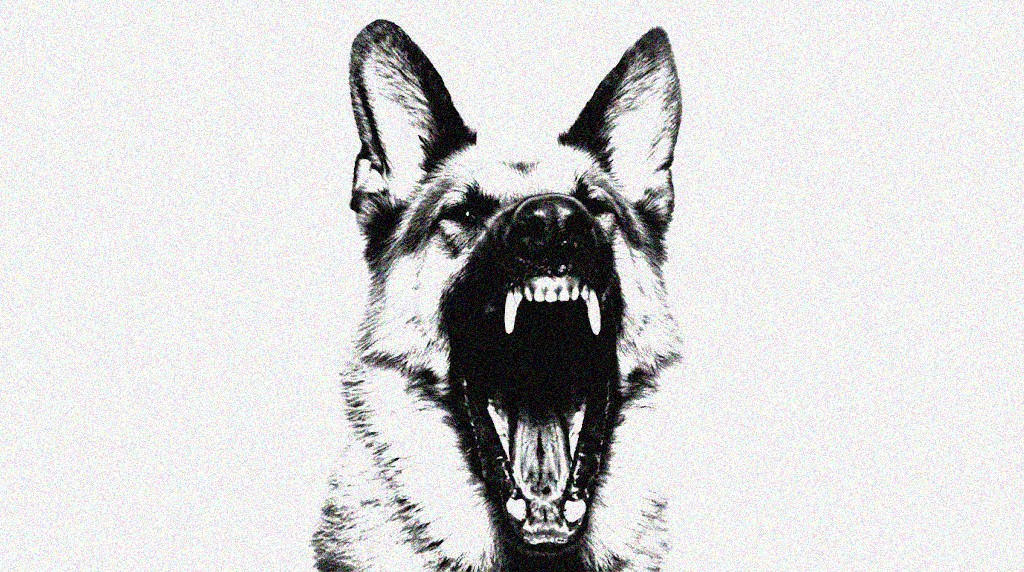
There's no silver bullet, and even a decade plus of experience is not a magic amulet. But there are people, a lot of us, who still believe in the work, and in what you can make. It's okay to be someone who'd rather get the craft right than perform it online. Hard work still pays off, even in the age of AI. It's okay to be exactly who you are. The work is bigger than the job you thought you signed up for, and there's still a place in it for you. You don't need anyone's permission to build things. Show teeth.
[IF THE IMAGE DOESN'T WORK, PUT A DOG IN IT. IF IT STILL DOESN'T WORK, PUT A BANDAGE ON THE DOG]
[I got fired on the day I left Denver]
Two years after COVID hit New York, I packed everything and moved to Colorado — out of the cityscape, closer to the mountains. For two years I backcountry skied with my mountaineer cousin and worked the contracts I'd carried with me from New York. For a while I could breathe. Then the contracts thinned, one by one, as clients pulled back from an economy that hadn't stopped contracting since the pandemic. Before I'd fully registered it, I was in survival mode.
[Around then, I learned my father was sick]
I was down bad, so I took a lead design role at a smart dog collar startup — mostly because the founder fast-tracked my application and promised me the world. What I pieced together shortly after was that he'd landed in hot water when SoftBank pulled back; he'd panicked and quietly let go of his entire design team. I arrived as the sole designer, expected to carry the work of a whole department.
The app had a feature for recovering a pet that had gone missing. The founder asked me to build a flow that solicited video testimonials from users the moment they exited that recovery flow — not to improve the product, but to generate marketing content. He wanted panicked pet owners to record video right after losing an animal. Maybe they'd gotten it back. Maybe they hadn't. Maybe they'd found it on the side of the road. I build for the person on the other side of the screen; the mandate ran against everything I practice. I came back with a range of softer, more humane alternatives. He refused, and reprimanded me for working proactively.
After that, I was pushed out over the course of my last summer in the mountains — taken off product, handed busywork. I had told leadership, plainly, that I was moving to Florida because my father was dying. In my final weeks they flooded me with work anyway. On my last day, with the movers scheduled for the afternoon, they pressed me to hit a marketing deadline that morning. The moment I handed off the work, my accounts froze. Everything went dark except one Slack message from the founder: "Can I connect?" He fired me from a balcony, on the back end of his end-of-summer vacation in Spain. I genuinely believe he angled the camera to show me his view of Barcelona. Then he blocked me — from Slack, and from the work I'd made. On moving day. My father had cancer.
[I put on a blank face and drove twelve hours through the night]
Twelve hours is a long time to think. I thought about the recruiter who'd reached out two weeks before I was fired. No prior relationship with her, no warm intro, in the worst job market I'd seen. I thought about twenty years of doubting myself while watching less capable people steer the ship. I thought about how imposter syndrome and sharp self-awareness can live in the same body. I thought about how this industry often hires on perception — more than on the actual work. I thought about the bootcamps that flooded the field right at my mid-career mark. How quickly hard-won experience got repriced. I thought about how the craft itself got commoditized — posted online, copied offshore, fed to a model. I thought about how the people who'd given their lives to this work kept losing to people who'd learned to perform it. And I thought about my father. How I'd left Colorado to be near him, and how, instead, he was going to have to make room for me. I thought about all of it. Alone, in the dark, for twelve hours.
And somewhere on that drive, the thing I kept circling back to wasn't the founder, or the recruiter, or the job market. It was that I still wanted to do the work. Not the performance around it — the LinkedIn theater, the personal-brand maintenance, the politics, the hand holding inept startup founders — but the work itself. The problem on the table. The thing that isn't right yet and could be. That's an inconvenient thing to learn about yourself at the bottom of a bad year, bad couple years considering it was only two past the padnemic. It would have been so much easier to be done.
[So I put my hands to work instead]
I got to Florida and spent the months that followed in and out of hospitals with my father, and in the hours around that, studying. I taught myself everything I could about AI — not because I was chasing a trend, but because it was the live edge of the work I love, and because the work was somewhere to put my hands when the rest of it was unbearable. Caring for him and caring about the craft turned out to be the same instinct: a refusal to go numb.
I won't pretend I have it all figured out, and I won't talk about where any of it lands. What I'll say is that this stretch made me understand, in a way I hadn't before, what family is actually worth. I'm fairly certain that years from now I'll look back on this hard, strange season — the one that opened with me getting fired from a balcony — and be grateful I got to be there for my parents when they needed it.
[Here is why I'm telling you this]
I waited a long time to write any of it down. I didn't post my layoff on LinkedIn — I can't stand LinkedIn — and I didn't write this for industry peers. I wrote it because what happened to me is happening to thousands of people right now, quietly, one balcony at a time. The tech layoffs get reported as numbers. They are not numbers. Each one is a person whose life got rerouted overnight — often while something else, something that actually mattered, was already going wrong in the background. That cost is real, and it's almost entirely invisible, and I think someone should say so plainly.
So if you found your way here — maybe you're a younger designer, maybe you're just someone the industry recently decided was disposable — here's what I have for you. Make your own rules; the old ones don't hold anymore. A lot of the studios and companies you can't get an interview with are running failing models. If everything feels unfair and upside down, it's because it is — but this industry has always been held together with duct tape and spaghetti code. None of it is a verdict on you.
There's no silver bullet, and twenty years of experience is not a magic amulet. But there are people — a lot of us — who still believe in the work, and in what you can make. It's okay to be the one who'd rather get the craft right than perform it online. Hard work still pays, even in the age of AI. It's okay to be exactly who you are. The work is bigger than the job you thought you signed up for, and there's still a place in it for you. You don't need anyone's permission to build things. Show teeth.
[IF THE IMAGE DOESN'T WORK, PUT A DOG IN IT. IF IT STILL DOESN'T WORK, PUT A BANDAGE ON THE DOG]
[I got fired on the day I left Denver]
Two years after COVID hit New York, I packed everything and moved to Colorado — out of the cityscape, closer to the mountains. For two years I backcountry skied with my mountaineer cousin and worked the contracts I'd carried with me from New York. For a while I could breathe. Then the contracts thinned, one by one, as clients pulled back from an economy that hadn't stopped 'contracting' or whatever we call this, since the pandemic. Before I'd fully registered it, I was in survival mode.
[Around then, I learned my father was sick]
So, I took a lead design role at a smart dog collar startup — mostly because the founder fast-tracked my application and promised me the world. What I pieced together shortly after was that he'd landed in hot water when SoftBank pulled back; he'd panicked and quietly let go of his entire design team. I arrived as the sole designer, expected to carry the work of a whole design department alone.
The app had a feature for recovering a pet that had gone missing. The founder asked me to build a flow that solicited video testimonials from users the moment they exited that recovery flow — not to improve the product, but to generate marketing content. He wanted panicked pet owners to record video right after losing an animal. Maybe they'd gotten it back. Maybe they hadn't. Maybe they'd found it on the side of the road. I build for the person on the other side of the screen; the mandate ran against everything I practice. I came back with a range of softer, more humane alternatives. He refused, and reprimanded me for working proactively.
After that, I was pushed out over the course of my last summer in the mountains — taken off product, handed busywork. I had told leadership, plainly, that I was moving to Florida because my father was gravely sick. In my final weeks they flooded me with work anyway. On my last day, with the movers scheduled for the afternoon, they pressed me to hit a marketing deadline that morning. The moment I handed off the work, my accounts froze. Everything went dark except one Slack message from the founder: "Can I connect?" He fired me from a balcony, on the back end of his end-of-summer vacation in Spain. I genuinely believe he angled the camera to show me his view of Barcelona. Then he blocked me — from Slack, and from the work I'd made. On moving day. My father had cancer.
[I put on a blank face and drove twelve hours through the night]
Twelve hours is a long time to think.
I thought about the recruiter who'd reached out two weeks before I was fired.
No prior relationship with her, no warm intro, in the worst job market I'd seen.
I thought about twenty years of doubting myself while watching less capable people steer the ship.
I thought about how imposter syndrome and sharp self-awareness can live in the same body.
I thought about how this industry often hires on perception — more than on the actual work.
I thought about the bootcamps that flooded the field right at my mid-career mark.
How quickly hard-won experience got repriced.
I thought about how the craft itself got commoditized — posted online, copied offshore, fed to a model.
I thought about how the people who'd given their lives to this work kept losing to people who'd learned to perform it.
And I thought about my father.
How I'd left Colorado to be near him, and how, instead, he was going to have to make room for me.
I thought about all of it.
Alone, in the dark, for twelve hours.
And somewhere on that drive, the thing I kept circling back to wasn't the founder, or the recruiter, or the job market. It was that I still wanted to do the work. Not the performance around it — the LinkedIn theater, the personal-brand maintenance, the politics, the hand holding inept startup founders — but the work itself. The problem on the table. The thing that isn't right yet and could be. That's an inconvenient thing to learn about yourself at the bottom of a bad year, bad couple years considering it was only a few past the pandemic. It would have been so much easier to be done.
[I put my hands to work instead]
I got to Florida and spent the months that followed in and out of hospitals with my father, and in the hours around that, studying. I taught myself everything I could about AI — not because I was chasing a trend, but because it was the live edge of the work I love, and because the work was somewhere to put my hands when the rest of it was unbearable. Caring for him and caring about the craft turned out to be the same reflex: a refusal to surrender.
I won't pretend I have it all figured out, and I won't talk about where any of it lands. What I'll say is that this stretch made me understand, in a way I hadn't before, what family is actually worth. Family is everything. I'm fairly certain that years from now I'll look back on this hard, strange season — the one that opened with me getting fired from a balcony — and be grateful I got to be there for my family when they needed it.
[why I'm telling you this NOW]
I waited a long time to write any of it down. I didn't post my layoff on LinkedIn — I can't stand LinkedIn — and I didn't write this for industry peers. I wrote this because what happened to me is happening to thousands of people right now, quietly, one balcony at a time. The tech layoffs get reported as numbers. They are not numbers. Each one is a person whose life got rerouted overnight — often while something else, something that actually mattered, was already going wrong in the background. That cost is real, and it's almost entirely invisible, and I think someone should say so plainly.
So if you found your way here — maybe you're a younger designer, maybe you're just someone the industry recently decided was disposable — here's what I have for you. Make your own rules; the old ones don't apply anymore. A lot of the studios and companies you can't get an interview with are failing. If everything feels unfair and upside down, it's because it is — but this industry has always been held together with duct tape and spaghetti code. None of it is a verdict on you.
There's no silver bullet, and even a decade plus of experience is not a magic amulet. But there are people, a lot of us, who still believe in the work, and in what you can make. It's okay to be someone who'd rather get the craft right than perform it online. Hard work still pays off, even in the age of AI. It's okay to be exactly who you are. The work is bigger than the job you thought you signed up for, and there's still a place in it for you. You don't need anyone's permission to build things. Show teeth.
[IF THE IMAGE DOESN'T WORK,
PUT A DOG IN IT. IF IT STILL DOESN'T WORK,
PUT A BANDAGE ON THE DOG]
ARTICLES
ARTICLES
View all


BRAVE THE FUTURE
WITH A FRIEND.
BRAVE THE FUTURE
WITH A FRIEND.